More than a luminaire: a system
Three technology bricks developed in-house, and the services to deploy them.
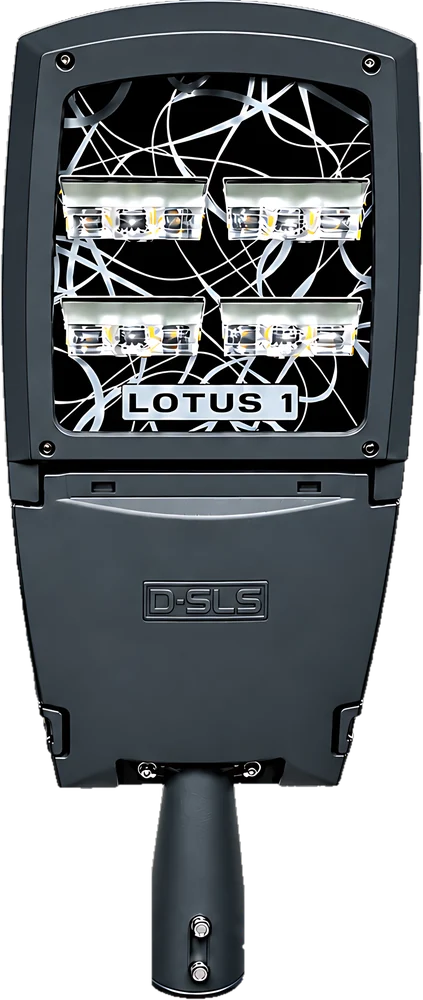
Every light point, under control
Full remote management of the network: dimming scenarios, predictive-maintenance alerts, point-by-point energy metering and open interoperability.
- TALQ 2.7.1 — any luminaire can act as a gateway · 10,000+ node mesh
- DALI D4i — native driver data and diagnostics
- D-SLS Cloud Infrastructure — redundant hosting in Europe
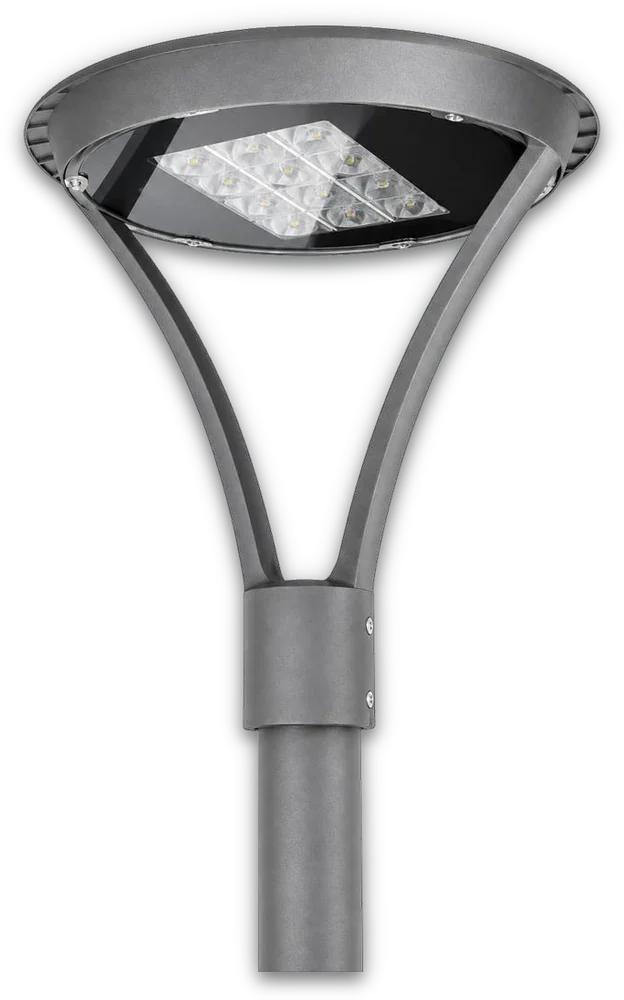
Embedded LiDAR detection
The LiDAR sensor tells pedestrian, cyclist and vehicle apart — no camera, so no images. Light rises on approach and falls behind the passage, pole after pole.
- Privacy by design — point cloud, no image captured
- 100 m range · ±5 cm — pedestrian / cyclist / vehicle classification
- Light on demand — −40 to −70 % energy, footfall counting included
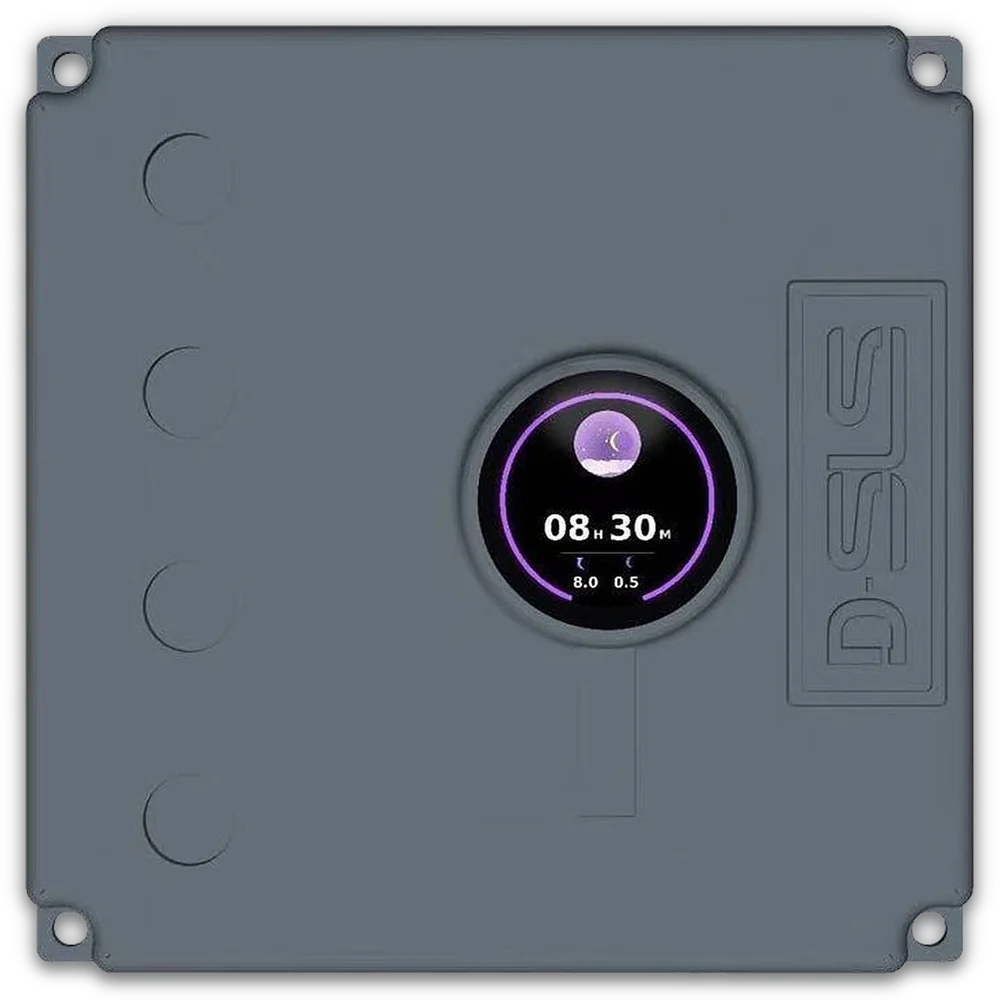
Solar, storage & V2G
For off-grid sites — or those who want to become one: panel, MPPT regulation, multi-night battery, and V2G re-injection of the surplus.
- Autonomy — sized on your site’s real solar resource
- Hybrid — seamless grid/battery switchover
- V2G — the surplus feeds the grid or charging points
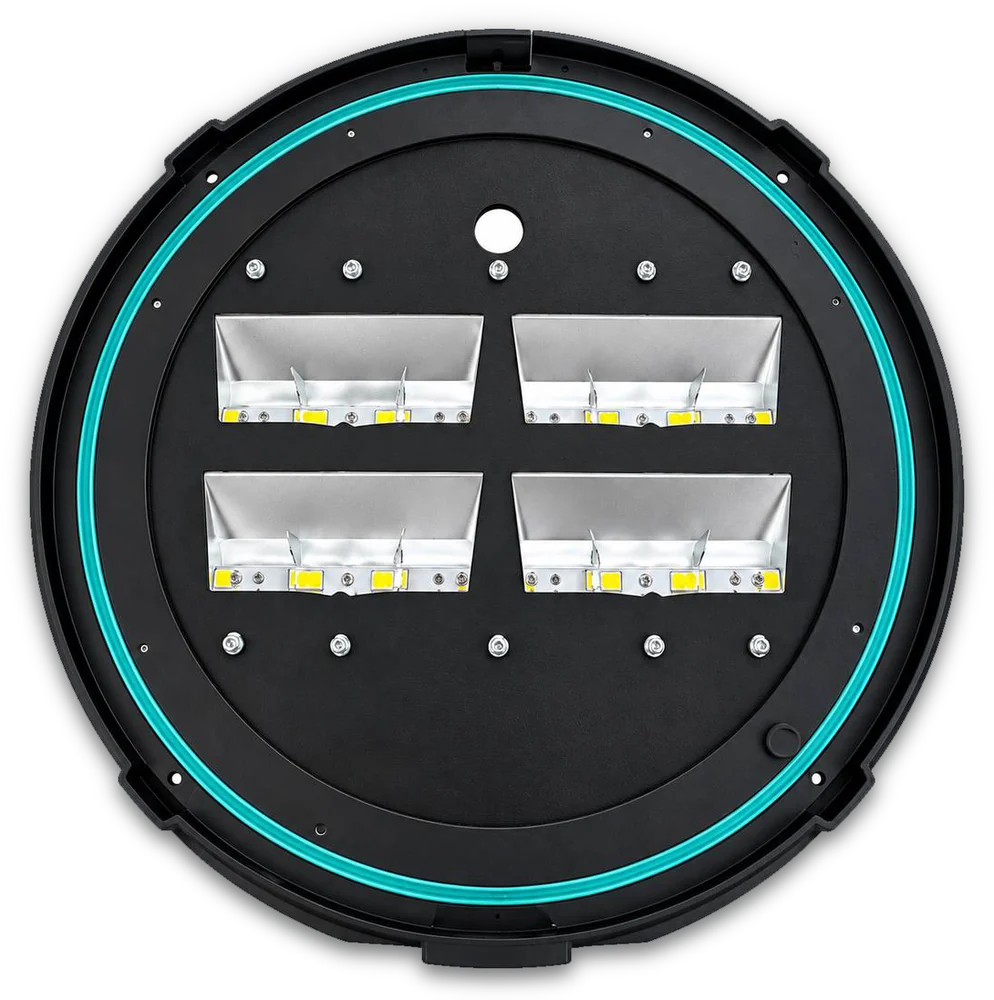
From the idea to the public tender
D-SLS — Digital Smart Lighting Solutions: the « S » stands for Solutions. We help municipalities modernise their street lighting within their budget, even without a specialised lighting engineering office.
- Survey of the existing network — inventory of light points, condition of poles, current consumption
- Upgrade what exists — keep poles and lanterns in good condition, switch the source to LED with the retrofit kit
- Budget plan — cost estimate, works in phases, expected energy savings
- Tender preparation — technical study, technical specifications, bill of quantities
From study to operation
Photometric studies
Installation sizing to the lighting classes of your roads and spaces.
Integration & commissioning
Remote-management roll-out, takeover of existing networks, team training.
Warranty & support
Network monitoring, spare parts and modules, support in English, French and Italian.
Frequently asked questions
How much energy saving is really achievable?
From −60 % to −84 % per point depending on the source replaced: HPS → LOTUS already divides power by ~2.5, and LiDAR removes another 40–70 % of the remainder (measured example: 250 W HPS, 1,155 → 180 kWh/yr).
Does detection use cameras?
No. The LiDAR sensor produces an anonymous point cloud: no image, no face, no plate — pedestrian / cyclist / vehicle classification works on shape and motion.
What autonomy for the solar version?
The battery is sized on the site's real solar resource for several consecutive sunless nights, with adaptive dimming to protect the reserve — and optional V2G re-injection.
Can I make my existing network smart?
Yes: our nodes mount on the Zhaga or NEMA socket of market luminaires and speak DALI D4i; the LidarMesh platform takes over the network as it is, without changing the luminaires.
Which warranties and certifications?
LED street-lamp families under TÜV SÜD Product Service attestation (LVD 2014/35/EU, No. N8A 08132 0101), tests to EN IEC 60598-1, EN 60598-2-3, EN 62493; ENEC driver; optional 10-year extended warranty (W10).